The Owner's Manual Chapter Everyone Skips: Your First 50,000 Miles

Photo: Janchu93, CC BY-SA 4.0, via Wikimedia Commons
Nobody reads the owner's manual. We get it — it's 400 pages, half of it's about the infotainment screen, and it's written in a tone of gentle disappointment. But buried in there is the maintenance schedule that determines whether your car is still running happily at 200,000 miles or getting traded in with a shrug at 110,000.
So consider this the condensed version. If you bought your first car — new or new-to-you — here's what matters before you hit that 50K odometer mark.
1. Find the Maintenance Schedule and Photograph It
Open the manual to the scheduled maintenance section (it's usually near the back) and take pictures of every page. That's your roadmap. Two things to know: most manufacturers publish a "normal" and a "severe" schedule, and almost everyone actually drives under the severe one — short trips, stop-and-go traffic, extreme heat or cold. When in doubt, follow the severe schedule. It sounds paranoid; it's just honest.
2. Learn Where Every Fluid Reservoir Lives
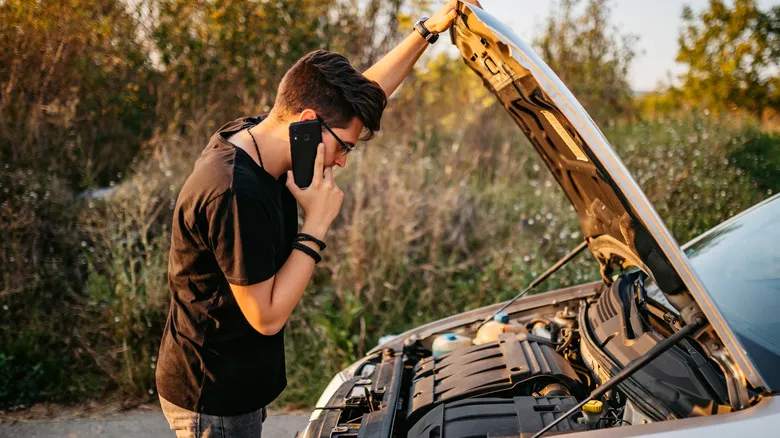
Pop the hood once and find them all: engine oil, coolant, brake fluid, washer fluid, transmission (if there's a dipstick — many newer cars don't have one). You're not becoming a mechanic. You're learning what normal looks like, so that a slow leak or a weird color registers as a problem instead of a surprise. Ten minutes, once.
3. Check Your Own Oil Monthly — Yes, Really
Modern cars burn a little oil between changes, and some burn more than the manual admits. A car that's a quart low doesn't warn you until it's damaging bearings. Pull the dipstick (or check the oil life monitor and top off per the manual), once a month, same gas station ritual as checking the tires. The five-figure repairs — timing chain, engine replacement — usually trace back to oil that was ignored.
4. Rotate Tires Every 5,000–7,500 Miles
Tire rotation is the least glamorous service on Earth and one of the highest-value. Front and rear tires wear differently, and uneven wear means buying a new set thousands of miles early. Most shops rotate free or cheap with an oil change. Set a phone reminder and stop thinking about it.
5. Don't Ignore the Brake Fluid Interval
Here's the one shops skip and manuals don't: brake fluid absorbs moisture over time, and water-laden fluid corrodes brake components from the inside and lowers boiling point. Many manufacturers call for a flush every 2–3 years regardless of miles. Almost nobody does it. Be the person who does it.
6. Wash the Undercarriage After Winter
Road salt is doing chemistry on your frame every February. A $10 automatic car wash with an underbody spray, run a few times each winter, is the cheapest rust prevention available. In the Rust Belt, this habit alone adds years to brake lines, fuel lines, and suspension parts.
7. Keep a Simple Log
A note on your phone is fine. Date, mileage, what was done. That's it. When you sell the car, a documented history adds real money to the price. When something goes wrong, the log tells the mechanic where to look. And when a shop recommends a "flush" you got 4,000 miles ago, the log saves you from paying twice.
The Big Picture
Everything above costs less over five years than a single month of a car payment. First-time owners get sold on the scary stuff — transmission flushes, engine decals, fuel system miracles — while the boring basics quietly determine the car's fate. Do the boring basics. Future you, at 150,000 miles, will be genuinely grateful.