Penny Wise, Engine Foolish: The Real Price Tag of Skipping Oil Changes
Let's be honest. Life gets busy, and that little sticker in the corner of your windshield is easy to ignore. Maybe you're a few hundred miles over. Maybe it's been a few months longer than it should've been. No big deal, right?
Wrong—and we're not saying that to scare you into a service bay. We're saying it because the math is genuinely brutal once you see it laid out.
What's Actually Happening Under Your Hood
Engine oil isn't just a lubricant. It's a coolant, a cleaner, and a corrosion barrier all rolled into one. Fresh oil is a light amber color and flows freely through your engine's tight tolerances. Degraded oil turns dark, thickens, and starts carrying metal particles and combustion byproducts through your engine instead of flushing them out.
Once oil breaks down past a certain point, it stops protecting and starts contributing to wear. Bearing surfaces grind against each other. Sludge builds up in oil passages. Piston rings lose their seal. None of this happens overnight—but it compounds quietly every time you turn the key.
Mechanics who've been doing this for decades will tell you the same thing: the engines that come in for major repairs almost always have a history of irregular oil changes. It's not a coincidence.
The Cascade Nobody Talks About
Here's where the real cost hides. Skipping one oil change doesn't destroy your engine. But it starts a cascade of accelerated wear that shows up in stages—each one more expensive than the last.
Stage 1 – Oil Sludge Buildup ($0 in damage, but the clock is ticking) Old oil oxidizes and forms sludge that coats internal surfaces. Your engine works harder to compensate. Fuel economy quietly drops.
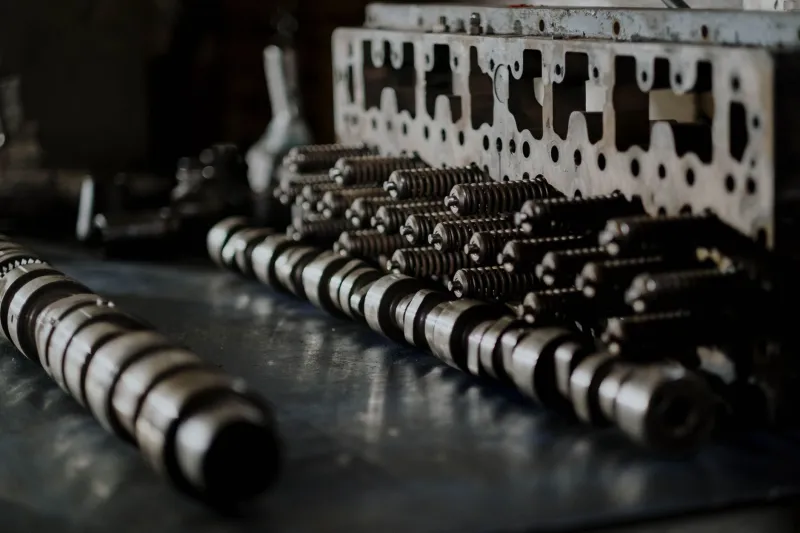
Stage 2 – Increased Wear on Moving Parts ($200–$800 in eventual repairs) Bearings, camshaft lobes, and valve train components start showing premature wear. At this stage, a mechanic might notice it during an unrelated inspection, but you won't feel it yet.
Stage 3 – Oil Consumption and Leaks ($400–$1,500) Worn seals and rings allow oil to burn off or leak. You're adding quarts between changes. Gaskets fail. Now you've got visible problems.
Stage 4 – Major Engine Damage ($2,500–$8,000+) Bearing failure, spun rod bearings, or complete engine seizure. At this point, you're looking at either a rebuilt engine or a new vehicle altogether.
For context, a conventional oil change on a popular vehicle like a Toyota Camry, Ford F-150, or Honda CR-V runs somewhere between $50 and $100 at most shops. A full engine replacement on that same F-150? Easily $5,000 to $7,500 in parts and labor.
Real Numbers From Real Vehicles
Let's look at two hypothetical owners of the same 2018 Honda Accord with 90,000 miles.
Owner A followed the factory maintenance schedule—oil changes every 5,000–7,500 miles, filters replaced on schedule, fluids topped off. Total maintenance spend over five years: approximately $1,200. The car runs cleanly, holds its value, and hasn't had a single major repair.
Owner B stretched oil changes to 12,000–15,000 miles, skipped a few entirely during a rough financial stretch, and used whatever oil was cheapest. By 85,000 miles, the car developed a persistent knock. Diagnosis: sludge-clogged oil passages and a failing rod bearing. Repair estimate: $3,800. That's before factoring in the rental car, lost time, and the trade-in value hit the car will take.
The difference in spending between those two owners is staggering—and the irony is that Owner B was trying to save money.
Transmission and Coolant: Oil's Forgotten Cousins
Oil gets most of the attention, but deferred maintenance on transmission fluid and coolant follows the same painful logic.
Transmission fluid breaks down under heat and stops protecting internal clutch packs and bearings. A transmission flush runs $150–$250. A rebuilt automatic transmission runs $2,500–$4,500. Coolant that's been in the system too long becomes acidic and starts eating away at your radiator, water pump, and heater core from the inside.
These aren't scare tactics. Ask any shop that does high-volume repair work and they'll confirm: deferred fluid maintenance is one of the top contributors to expensive, avoidable repairs.
How to Stop the Bleeding (Even If You're Already Behind)
If you're reading this and realizing you're overdue, don't panic. Here's what to do:
-
Get your oil changed now. Don't wait until the next convenient moment. If your engine is already showing sludge symptoms, ask about an engine flush service before the fresh oil goes in.
-
Pull your maintenance records. If you don't have them, your dealership or previous shop may. Knowing what's been done helps prioritize what's next.
-
Set a realistic schedule going forward. Most modern vehicles with synthetic oil can go 7,500 to 10,000 miles between changes. Check your owner's manual and stick to it.
-
Don't try to catch up all at once. If you're behind on multiple services, work through them systematically. A good shop can help you triage based on urgency and your budget.
The Bottom Line
Scheduled maintenance isn't a revenue scheme cooked up by mechanics. It's the difference between a vehicle that serves you for 200,000 miles and one that nickels-and-dimes you into a new car payment you weren't planning for.
At Hueco Automotive, we see both ends of this spectrum every week. The customers who stay on schedule sleep easier and spend less money over time. The ones who roll in with a knocking engine and a look of disbelief on their faces? We do our best for them too—but we'd much rather help you avoid getting there in the first place.
Your car is talking to you through that maintenance sticker. It's worth listening.