Your Neighbor's Tire Advice Might Be Ruining Your Car: A Climate-First Buying Guide
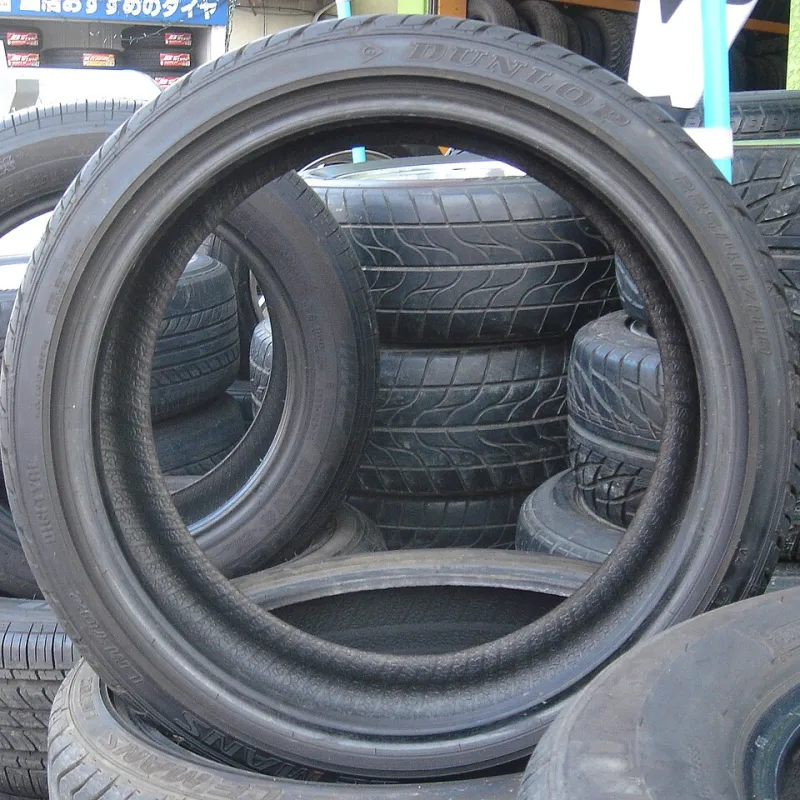
Photo: Angie from Sawara, Chiba-ken, Japan, CC BY 2.0, via Wikimedia Commons
Spend ten minutes in any automotive forum and you'll find someone confidently declaring that all-season tires are a scam, or that winter tires are a waste of money, or that you absolutely need max-performance summer rubber for your commute. Here's the thing they're all missing: tires are regional. The right answer in Buffalo is the wrong answer in Tucson, and the guy giving you advice has probably never driven an inch outside his own zip code.
Rubber Is a Chemistry Experiment — And Chemistry Cares About Temperature
Tire compounds are engineered for a specific temperature window. Summer tires use rubber blends that stay grippy and pliable in the heat but turn hard as a hockey puck below about 45°F. Winter tires do the opposite — their silica-rich compounds and thousands of tiny siping slits stay flexible in freezing temps, which is exactly what you want when the road is a sheet of ice.
All-season tires? They're a compromise, and like most compromises, they're decent at everything and excellent at nothing. That's not a knock — for most American drivers in moderate climates, decent at everything is genuinely the right call. The problem starts when someone in one climate imports another climate's advice wholesale.
What the Heat Does to Your Tires in Phoenix, Vegas, and Beyond
If you live in the Sun Belt, your tires are cooking. Pavement temperatures in an Arizona summer can hit 150°F or more, and that heat does two ugly things: it accelerates tread wear and it slowly degrades the rubber compounds themselves. UV exposure and heat cycling are why a six-year-old tire in Texas can be cracked and unsafe even with plenty of tread left.
For hot-climate drivers:
- Skip dedicated winter tires entirely. They'll wear out absurdly fast and handle like wet noodles in the heat.
- Check your tire pressure more often. For every 10°F jump in ambient temperature, pressure climbs roughly 1 PSI. Overinflated tires in July are a real thing.
- Inspect for dry rot. Tiny cracks in the sidewall matter more in hot states than tread depth numbers suggest.
- Consider touring-grade all-seasons with a high temperature rating rather than bargain-bin rubber.
What Cold and Snow Actually Demand Up North
Now flip the map. If you're in Michigan, upstate New York, or anywhere the plows run all night, the math changes completely. All-season tires — even good ones — lose a shocking amount of grip below 45°F because the compound stiffens up. The rubber simply can't conform to the road surface the way it's designed to.
Winter tires aren't just about snow. They're about cold, full stop. The tread compound stays soft and the bite edges grab packed snow and slush that all-seasons just slide across. If you regularly see sustained freezing temps, a dedicated winter set on cheap steel wheels — swapped out every spring — is one of the best safety investments you can make.
The in-between zones are trickier. Places like Tennessee, the Carolinas, or the Pacific Northwest lowlands get occasional ice but rarely deep snow. There, a modern "three-peak mountain snowflake" rated all-weather tire splits the difference nicely without needing a seasonal swap.
Read the Sidewall, Not the Forum
Here's your practical checklist next time you're shopping:
- Look for the 3PMSF symbol (a mountain with a snowflake inside) if you face real winter conditions. It's an actual tested standard, unlike the M+S marking, which is basically self-reported and means almost nothing.
- Check the treadwear and temperature grades. A higher temperature grade matters if you're in the South; traction grades matter more up North.
- Match the tire to your worst driving day, not your average one. The one ice storm a year is exactly when you need the grip.
- Mind the age. In hot climates, replace at six years regardless of tread. Heat kills rubber faster than miles do.
The Bottom Line
Tires are the only part of your car that actually touches the road, and the single best upgrade you can make is picking the right compound for where you actually drive. That guy on the forum with the glowing review? Ask him what his winters look like. If the answer doesn't sound like yours, keep scrolling — and come talk to us instead. We'll match you to your climate, not somebody else's.