Your Commuter Has a Turbo Now. Here's What That Means for Your Wallet.
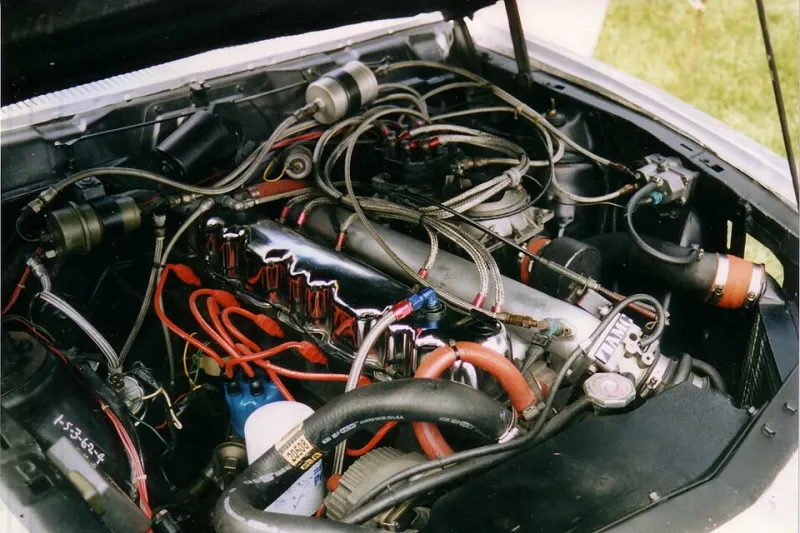
Photo: CZmarlin — Christopher Ziemnowicz, releases all rights but a photo credit would be appreciated if this image is used anywhere other than Wikipedia. Please leave a note at Wikipedia here. Thank you!, Public domain, via Wikimedia Commons
Open the hood of a Honda CR-V, a Ford Escape, or a base-model Chevy Silverado and you'll find something that used to be the exclusive territory of sports cars: a turbocharger. Somewhere in the last decade, boost became mainstream. Automakers discovered that a small turbocharged engine could match a big V6's power while sipping less fuel, and now turbos are everywhere — including in cars bought by people who have no idea they own one.
That's not a criticism. It's a knowledge gap with real maintenance consequences, because turbo engines have needs that your old naturally aspirated sedan never had.
What a Turbo Actually Does (30-Second Version)
A turbo is a turbine driven by your exhaust gas that spins — seriously fast, often over 150,000 rpm — to force extra air into the engine. More air means more fuel can burn, which means more power from a smaller engine. It's essentially a free lunch, except for one detail: the turbo spins on bearings bathed in engine oil, and that oil is sitting next to exhaust components hot enough to cook it.
Which brings us to the part that matters.
Oil Is Everything
A naturally aspirated engine can survive stretches of neglectful oil habits. A turbo really can't. The oil in a turbo's center housing gets hotter than almost anywhere else in the engine, and heat breaks oil down into varnish and carbon deposits — the root of most turbo failures.
The practical rules:
- Use the exact oil grade the manual specifies, full synthetic. This is not the place to experiment with whatever was on sale. Turbo-spec synthetics handle heat that conventional oil can't.
- Shorten your oil interval. If the manual says 10,000 miles, many techs will tell you 5,000–7,500 is smarter for a turbo, especially with lots of short trips. Oil is cheaper than turbos. A replacement turbo plus labor routinely runs $1,500–$3,000.
- Never let it run low. A turbo that starves for oil for even a hard minute can be done. Check the dipstick monthly — some turbo engines consume oil by design.
The Warm-Up and Cool-Down Habits
Cold oil is thick oil, and thick oil doesn't protect a spinning turbine well. Give a turbo engine 30–60 seconds of gentle driving before asking for full power, especially on cold mornings. Don't sit and idle for ten minutes — just drive easy at first.
The cool-down matters mostly after hard driving. If you've been flogging it on a highway on-ramp or towing up a grade, idling for 30–60 seconds before shutdown lets oil circulate through the hot turbo instead of sitting there baking. For a normal commute, it's a non-issue. For a road trip with a loaded trunk, it's a good habit.
'Routine' Services That Just Got Serious
A few maintenance items carry more weight on a boosted engine:
Air filter. A turbo ingests enormous volumes of air, and anything that gets past a clogged or damaged filter can chew the compressor wheel. Replace it on schedule, not "when it looks fine."
Oil filter quality. Cheap filters with weak bypass valves can starve a turbo momentarily. Stick with name-brand filters that meet the spec.
Boost leaks. A cracked charge pipe or loose clamp makes the turbo work harder and the engine run rich. If you hear an odd whistle or the car feels suddenly sluggish, that's a real symptom — not a quirk.
Don't Panic, Just Adjust
None of this means turbo engines are fragile time bombs. Modern ones are well-engineered and routinely clear 150,000+ miles. It means the margin for neglect is thinner. Treat the oil like the lifeblood it is, use quality parts, and your boosted commuter will quietly do its job for years — no drama, no whooshing required.