Stop Trusting the Color in Your Coolant Reservoir — It's Probably Lying to You
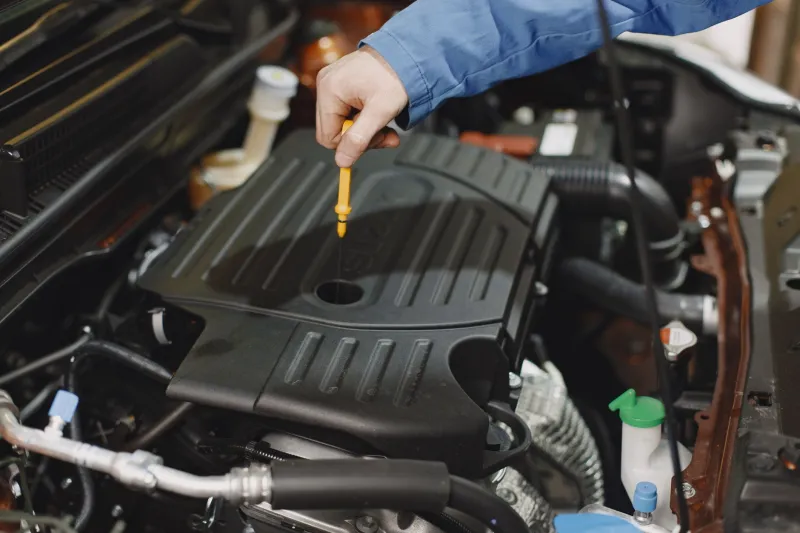
Walk into any auto parts store and you'll see a wall of coolant jugs in green, orange, pink, yellow, blue, and purple. Ask the average driver which one their car needs and they'll probably squint at their overflow reservoir, try to match the color, and call it a day. Seems logical, right?
Wrong. That approach has quietly ruined more cooling systems than most people realize.
Here's the uncomfortable truth: coolant color is a marketing decision, not a chemistry specification. The dye that makes your coolant green or orange is added after the actual formulation is complete. It tells you almost nothing about what's inside the bottle — and mixing the wrong types together can turn your cooling system into a sludgy, corrosive mess that damages gaskets, clogs passages, and eventually cooks your engine.
Let's break down what's actually going on under that brightly colored cap.
The Real Difference Is Chemistry, Not Color
Coolant formulations are defined by their corrosion inhibitor package — the chemical blend that protects your engine's metal surfaces, rubber hoses, plastic components, and water pump seals from breaking down over time. There are three main families you'll encounter in the US market:
IAT (Inorganic Additive Technology) — The old-school green stuff that dominated the market for decades. It uses silicates and phosphates as corrosion inhibitors. These work fast but deplete quickly, which is why older vehicles needed coolant changes every two years or 30,000 miles.
OAT (Organic Acid Technology) — This is where things started getting confusing. GM introduced Dex-Cool in the mid-'90s as a longer-life formula using organic acids instead of silicates. It was orange. But then other manufacturers started making OAT coolants in yellow, red, and even blue. Same chemistry category, completely different colors.
HOAT (Hybrid OAT) — A blend of both approaches, often used by European and Asian manufacturers. It comes in yellow, pink, purple, and sometimes blue depending on the brand. Volkswagen, BMW, Mercedes, Honda, and Toyota all have specific HOAT formulations that are not interchangeable with each other, even if they look identical in the bottle.
So when your neighbor tells you to just grab the orange jug because your car takes orange coolant, they might be setting you up for a problem. Two orange coolants from different brands can have completely incompatible inhibitor chemistries.
Why Mixing the Wrong Types Is Such a Big Deal
When incompatible coolants mix, the inhibitor packages can react with each other. What you get is a gel-like precipitate that circulates through your cooling system — clogging the small passages in your radiator, coating the inside of your heater core, and reducing flow to your water pump. In some cases, the resulting mixture becomes more acidic than either fluid alone, accelerating corrosion on aluminum components.
Aluminum is everywhere in modern engines. Cylinder heads, intake manifolds, water pump housings — all of it is vulnerable when the coolant chemistry goes sideways. And because the damage happens gradually, you might not notice until you're staring at an overheating gauge on the highway, miles from anywhere useful.
The repair bill for a clogged heater core alone can run $600–$1,200 in labor depending on your vehicle. A damaged water pump or warped cylinder head is a whole different conversation.
How to Actually Find the Right Coolant for Your Vehicle
Forget the color. Here's the process that actually works:
1. Check your owner's manual first. This sounds obvious, but most people skip it. The manual will specify the coolant type by name or standard — something like "HOAT, meeting Ford specification WSS-M97B44-D" or "Toyota Super Long Life Coolant." That's your starting point.
2. Look at the coolant cap or reservoir label. Many manufacturers print the required spec directly on the cooling system components. If you see a label that says "use only OAT coolant" or references a specific OEM spec number, that's more reliable than anything on a store shelf.
3. Use the vehicle lookup tool at the parts store or retailer website. Most major coolant brands — Prestone, Peak, Zerex — have compatibility tools on their websites. Enter your year, make, and model and they'll tell you which of their products meets your factory spec. This takes about 90 seconds and removes all the guesswork.
4. When in doubt, flush before you refill. If you don't know what's already in your system — especially on a used vehicle — a full coolant flush before adding anything new is the safest move. You're starting with a clean slate instead of gambling on compatibility with an unknown mixture.
The "Universal" Coolant Question
You've probably seen jugs labeled "all makes, all models" or "universal compatibility" on the shelf. These products use a formulation designed to be safe when mixed with multiple coolant types, and they're a reasonable short-term solution if you're topping off in an emergency and don't have the right product available.
But they're not a permanent substitute for the correct spec fluid. Universal coolants often represent a compromise — they work adequately across a range of applications without being optimized for any specific one. For a routine maintenance fill, you're better off using the correct OEM-spec product whenever possible.
A Note on Concentrate vs. Pre-Mix
While we're clearing up misconceptions: that "50/50" label on the jug means the coolant is already diluted with water and ready to pour in. Concentrate requires you to mix it with distilled water (not tap water — the minerals in tap water can cause deposits) in a 50/50 ratio before adding it to your system. Using concentrate straight, without diluting, actually reduces freeze protection in extreme cold because the freeze point of pure glycol is higher than a properly diluted mixture. It's one of those counterintuitive things that catches people off guard.
Bottom Line
Your cooling system is one of the hardest-working systems in your vehicle, and it tends to get ignored until something goes wrong. The good news is that getting it right isn't complicated — it just requires ignoring the color on the label and spending two minutes looking up the actual specification for your car.
At Hueco Automotive, we stock coolant products across all major formulation types and can help you find the right match for your specific vehicle. Whether you're doing a full flush or just topping off, getting the chemistry right from the start is the kind of small decision that pays off in a big way down the road.