Your Car Has a Filter You've Never Thought About — And It's Probably Disgusting
You change your oil. You check your tire pressure. Maybe you've even gotten around to replacing your wiper blades before they turned into rubber squeegees. But there's a solid chance there's a filter sitting inside your car right now that you've never once thought about — and depending on how long you've owned the vehicle, it might look like something you'd find underneath a couch cushion at a frat house.
We're talking about the cabin air filter. It's not glamorous. It doesn't get talked about at the shop the same way brakes or timing belts do. But it's quietly doing a job every single time you turn on your HVAC system, and when it fails, you'll know — because your car will start smelling like a gym bag left in a hot trunk.
So What Does a Cabin Air Filter Actually Do?
Think of it as the lungs of your car's interior. Every time you flip on the heat, the AC, or even just the fan, air gets pulled in from outside and pushed through a filtration layer before it ever reaches you and your passengers. That filter is catching pollen, dust, soot, exhaust particles, insects, leaves, and whatever else is floating around out there.
In cities with heavy traffic, that filter is working overtime. Same goes if you drive through areas with high pollen counts — which, if you live anywhere in the South or Midwest during spring, you already know is basically a yellow apocalypse. The filter handles all of that silently, in the background, until it can't anymore.
When it gets clogged, a few things happen. Airflow through your vents drops noticeably. Your AC has to work harder, which can affect efficiency. And in worst-case scenarios — especially in humid climates — moisture gets trapped in the filter material and mold or mildew starts growing. That's when the locker room smell kicks in, and no amount of air freshener hanging from your mirror is going to fix it.
Why Dealerships Love This Job (And Why You Shouldn't Let Them Do It)
Here's where it gets a little frustrating. Dealerships and quick-lube chains often charge anywhere from $50 to $100 or more to replace a cabin air filter — sometimes significantly more at luxury brand service centers. The filter itself, at retail, usually runs between $10 and $25 depending on your vehicle. The labor? It takes most people under ten minutes.
That markup isn't exactly a secret in the industry. Cabin air filter replacement is one of the highest-margin upsells in automotive service, precisely because the average driver has no idea the part exists, let alone where it's located or how to swap it. When a service advisor pulls out a dusty, grey filter and holds it up next to your face, it's a pretty effective sales pitch.
We're not saying every shop is trying to rip you off — plenty of honest mechanics exist — but this is one job where doing it yourself makes a lot of financial sense, especially when you realize how simple it actually is.
How Do You Know When Yours Needs Replacing?
Most manufacturers recommend replacing the cabin air filter every 15,000 to 25,000 miles, but that's a ballpark. The real answer depends on where and how you drive. Here are the signs to watch for:
- Reduced airflow from your vents. If your fan sounds like it's working hard but the air coming out feels weak, a clogged filter is a likely culprit.
- Musty or stale odors when the HVAC kicks on. This is the big one. That funky smell isn't just unpleasant — it can mean mold is present in the filter housing.
- More dust settling on your dashboard. A failing filter lets more particulates through, and you might notice your interior getting dustier faster than usual.
- Allergy symptoms getting worse inside the car. If you're sneezing more on your commute, your filter may not be catching what it used to.
- It's been over two years and you genuinely can't remember the last time it was changed. That's reason enough right there.
The DIY Swap: It's Easier Than You Think
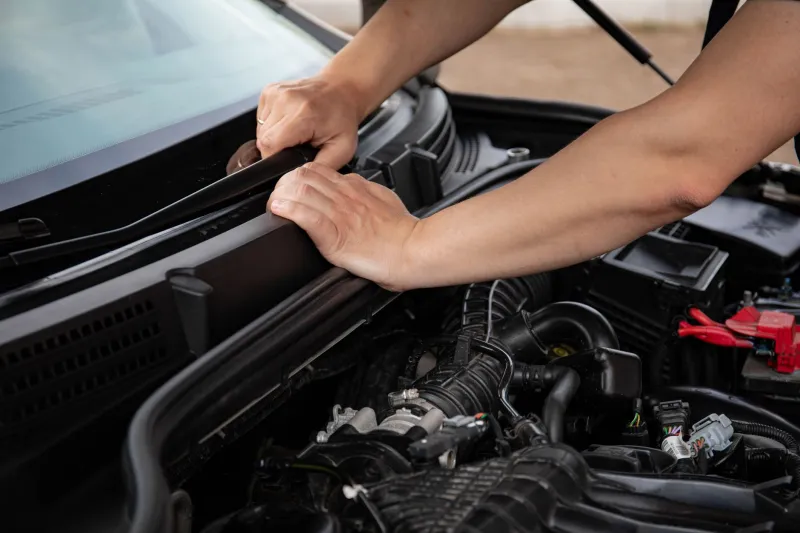
For most vehicles, replacing the cabin air filter is a no-tools-required job. The filter is typically located in one of two places: behind the glove box or under the dashboard on the passenger side, or under the hood near the base of the windshield in the cowl area. A quick search of your year, make, and model will tell you exactly where to look — and YouTube will show you a video of someone doing it in real time.
The basic process goes like this:
- Locate the filter housing. For glove box access, you often just need to press in the sides and let it drop down to reveal the filter compartment.
- Slide out the old filter. Note the direction of the airflow arrows on the side — you'll want to match that when you put the new one in.
- Check the housing for debris. Sometimes leaves and other junk accumulate in there. Wipe it out if needed.
- Slide in the new filter with the airflow arrow pointing the right direction.
- Reassemble everything and you're done.
Seriously, that's it. If you can change a furnace filter at home, you can handle this.
Picking the Right Replacement Filter
Standard cabin air filters do a solid job for most drivers. But if you or someone in your household deals with allergies or asthma, it's worth stepping up to a HEPA-rated or activated carbon filter. Carbon filters are especially good at neutralizing odors — not just trapping particles, but actually eliminating smells from exhaust, smoke, and other sources. They cost a bit more, usually in the $20 to $40 range, but for daily drivers in urban areas or high-pollen zones, the upgrade is worth it.
When you're buying, make sure you're matching the filter to your specific vehicle. The part number matters — a filter that's even slightly off in dimension won't seat correctly in the housing, which defeats the whole purpose.
Don't Sleep on This One
The cabin air filter isn't the most exciting maintenance item on your vehicle. It's not going to come up in conversation at a cookout. But it's one of those things that directly affects your daily comfort, your air quality, and — if you've got kids or elderly passengers — their health too.
Spending $15 to $25 on a new filter and ten minutes of your time is a genuinely good deal. Letting a shop charge you $80 for the same job because you didn't know better? That's the kind of thing we'd rather you avoid. Now you know what to look for, what to buy, and how to handle it yourself. That's the whole point.