Your Serpentine Belt Is Probably Fine — Here's How to Know for Sure
If you've ever brought your car in for an oil change and walked out with a quote for a serpentine belt replacement, you're not alone. It's one of the most common upsells in the business — and one of the most unnecessary. The belt gets flagged, the service advisor throws around words like "cracking" and "imminent failure," and suddenly you're staring at a $150–$300 repair you weren't planning on.
Here's the thing: serpentine belts are actually pretty tough. Modern belts, especially those made with EPDM rubber (ethylene propylene diene monomer), are engineered to last 60,000 to 100,000 miles under normal driving conditions. And unlike the old V-belts that would visibly fray and crack before letting go, today's belts tend to wear in ways that are harder to see — which is exactly what some shops exploit.
Let's break down what's actually going on with your belt, how to inspect it yourself, and when replacement is genuinely warranted.
Why Shops Jump on Belt Replacements
Serpentine belt replacements are relatively quick jobs with decent labor margins. The part itself might cost $25–$60, but shops can charge $100–$250+ in total once labor is factored in. For a technician who spots surface-level wear during a routine inspection, it's an easy pitch to a customer who has no frame of reference.
The fear factor is real, too. Your serpentine belt drives your alternator, power steering pump, water pump, and AC compressor — sometimes all at once. If it snaps, your car dies on the spot. That's a legitimate concern. But "could fail someday" is very different from "needs replacement now," and shops often blur that line.
Some service advisors are genuinely looking out for you. Others are working toward a monthly sales target. The problem is you can't always tell the difference — unless you know what to look for yourself.
What a Worn Belt Actually Looks Like
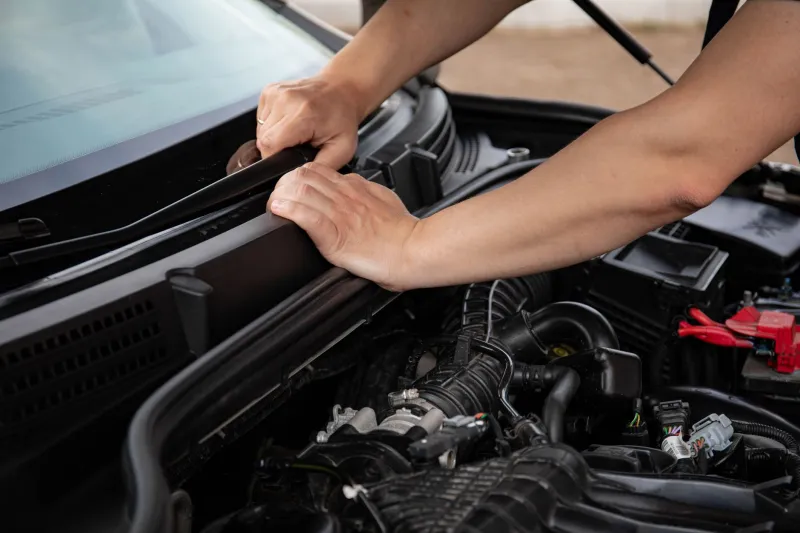
This is where it gets practical. Pop the hood and locate the serpentine belt — it's the long, ribbed belt that snakes around multiple pulleys near the front of the engine. You don't need to be a mechanic to do a basic visual check. Here's what to look for:
Rib Wear and Glazing Flip the belt and look at the ribbed side. The ribs should have defined, sharp edges. If the ribs look rounded, smooth, or shiny (glazed), that's a sign of wear. Glazing reduces grip and can cause slipping, especially under load. This is one of the more legitimate reasons to replace a belt — but it's also easy to overstate.
Cracking Light surface cracking used to be a red flag back in the days of neoprene belts. EPDM belts crack differently — they develop small, shallow cracks across the ribs as a normal part of aging. A few minor cracks don't mean immediate failure. What you're watching for is deep cracking that reaches the belt's tensile cords, or chunks of material that are actually missing.
Fraying or Chunks Missing If you see pieces of the belt material breaking off, exposed cords, or visible separation between layers, that's a real problem. Don't drive on a belt in that condition.
Squealing or Slipping A belt that squeals on startup or during hard acceleration (like turning the wheel all the way while stationary) might be slipping. This can be caused by a worn belt, a bad tensioner, or a misaligned pulley — so don't assume the belt itself is always the culprit.
The EPDM Wear Gauge Trick
Here's something most shops won't tell you: there are inexpensive belt wear gauges designed specifically for EPDM belts that measure rib depth. Gates, one of the largest belt manufacturers in the country, actually makes one and has recommended their use for accurate diagnosis. The gauge slides into the belt's grooves — if the ribs are still deep enough, the belt passes. Simple as that.
These gauges run about $5–$15 online. If you want an objective second opinion on whether your belt is worn, this is a cheap and reliable way to get one. A shop that tells you your belt is bad but can't point to specific, measurable wear is a shop that's guessing — or selling.
Tensioners and Idler Pulleys: The Real Weak Links
Here's a twist: while the belt itself often gets replaced prematurely, the tensioner and idler pulleys are components that genuinely do wear out and often get overlooked. A bad tensioner can cause belt slippage, uneven wear, and eventually belt failure — even on a relatively new belt.
When you're inspecting the belt, spin the idler pulleys by hand (with the engine off). They should spin smoothly and quietly. Any roughness, grinding, or wobble means the bearing inside is going. A worn tensioner pulley might wobble visibly or fail to hold proper belt tension.
If you're getting a belt replaced, it's often worth replacing the tensioner at the same time — not because it's always necessary, but because the labor overlaps and it's a legitimate wear item. That's a conversation worth having with your shop. Just make sure it's based on actual pulley condition, not a blanket upsell.
When to Actually Replace It
So when is replacement the right call? Here's a straightforward breakdown:
- Mileage: If you're past 80,000–100,000 miles and the belt has never been replaced, it's reasonable to swap it out as preventive maintenance — especially before a long road trip.
- Visible damage: Deep cracking, missing chunks, exposed cords, or fraying are legitimate grounds for immediate replacement.
- Rib wear confirmed by gauge: If the ribs measure below spec, replace it.
- Squealing that persists: If the belt is slipping after ruling out pulley and tensioner issues, it's time.
- Age: Even low-mileage vehicles can have belt degradation from heat cycling and age. If the belt is 7–10 years old, inspect it closely regardless of mileage.
Outside of those conditions? You probably have more miles left than your shop is letting on.
Do It Yourself or Get a Second Opinion
Serpentine belt inspection is one of the easiest DIY checks you can do. It takes about five minutes, requires no special tools beyond a flashlight, and gives you real information instead of a service advisor's pitch. If a shop tells you the belt needs to go, ask them to show you specifically what they're seeing. A reputable tech will point to actual wear. If they can't give you a clear answer, that's your cue to get a second opinion.
At Hueco Automotive, we believe you should understand what's happening under your hood — not just take someone's word for it. The serpentine belt is a perfect example of a part that's easy to assess yourself, and doing so puts you in a much stronger position when it's time to talk to a shop. Know what you're looking at, know the numbers, and don't let the fear of a breakdown push you into a repair that can wait.