The Check Engine Light Came Back — Because You Never Actually Fixed It
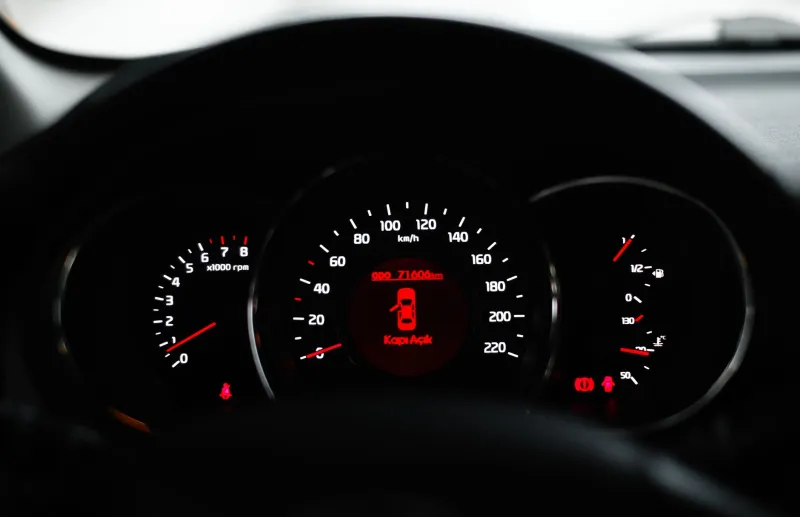
We've all been there. That little amber glow shows up on your dashboard, you swing into an AutoZone or O'Reilly, have them scan it for free, maybe Google the code for thirty seconds, and then ask them to clear it. Light goes off. Problem solved, right?
Not even close.
The check engine light coming back isn't bad luck. It isn't a fluke. It's your car telling you — again, a little louder this time — that whatever caused the original code is still very much happening under the hood. And the longer you keep playing this game of whack-a-mole with a free scanner, the more you risk turning a minor fix into a major repair bill.
Let's break down what's actually going on.
Clearing a Code Isn't the Same as Fixing a Problem
This is the part that trips up a lot of people, and honestly, it's not entirely their fault. The way code readers are marketed — especially the cheap Bluetooth dongles you can grab off Amazon for fifteen bucks — makes it sound like the device is diagnosing your car. It isn't.
A code reader reads a trouble code. That code is basically a breadcrumb your car's onboard computer (the ECU) left behind when it detected something out of the normal operating range. Clearing that code tells the ECU to stop flagging the issue — it does absolutely nothing to address whatever triggered the flag in the first place.
Think of it like silencing a smoke alarm instead of finding the fire. The alarm stops beeping. The problem doesn't stop existing.
When the underlying condition persists — a misfiring cylinder, a failing oxygen sensor, a loose gas cap causing a fuel system leak code — the ECU will detect it again during its next set of self-tests and turn the light back on. Usually within 50 to 100 miles of driving, sometimes sooner.
So What Do the Codes Actually Mean?
Here's where it gets a little more nuanced. Not every check engine code is a five-alarm emergency. Some are genuinely minor. But you need to know the difference, and a generic code reader won't tell you.
Codes that are often minor:
- P0440 / P0442 / P0455 — These are EVAP (evaporative emission control) codes, frequently triggered by a loose or damaged gas cap. Tighten the cap, clear the code, see if it stays off. Sometimes that's genuinely all it is.
- P0171 / P0174 — Lean fuel mixture codes. Could be a dirty mass airflow sensor or a small vacuum leak. Annoying, but not immediately catastrophic.
- P0420 — Catalyst efficiency below threshold. Often points to a worn catalytic converter or a failing oxygen sensor. This one tends to be pricier to fix but won't leave you stranded overnight.
Codes that deserve immediate attention:
- P0300 series (P0301, P0302, etc.) — Random or cylinder-specific misfires. If you're feeling a rough idle or hesitation, don't ignore these. Persistent misfires can damage your catalytic converter and eventually your engine.
- P0016 / P0017 — Crankshaft/camshaft correlation codes. These can indicate timing chain issues. On some engines, ignoring this long enough leads to catastrophic internal damage.
- Anything flashing — A flashing check engine light (not steady, but blinking) means an active, severe misfire is happening right now. Pull over when it's safe. Driving with a flashing CEL can destroy a catalytic converter in a matter of miles.
The point is: a five-digit code is a starting point, not a diagnosis. Without live data, freeze frame data, and a technician who knows how to interpret both, you're guessing.
Why Cheap Code Readers Leave You Stranded
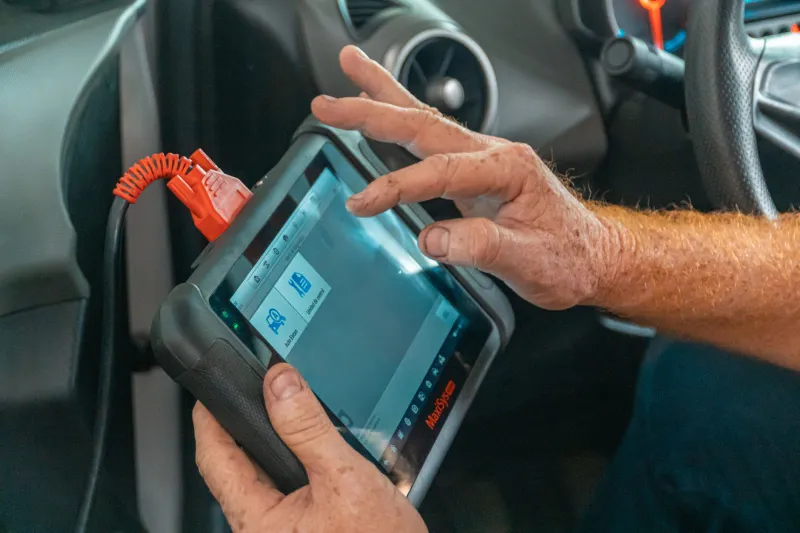
Entry-level OBD-II scanners — including most of the free pull-a-code services at parts stores — only read generic powertrain codes. That covers a lot of ground, but it leaves out manufacturer-specific codes, ABS codes, transmission codes, and anything related to body or chassis systems.
More importantly, they don't give you the full picture. A proper diagnostic scan includes live sensor data — things like oxygen sensor voltage over time, fuel trim percentages, coolant temperature readings, and misfire counts per cylinder. Without that data, you might replace a part that tested fine and miss the one that's actually failing.
This is how people end up spending $200 on a new oxygen sensor when the real problem was a cracked intake boot letting unmetered air into the engine. The oxygen sensor was just reacting to the symptom. The boot was the cause.
When Shops Use Your Warning Light Against You
Here's the honest part of this conversation, because it needs to be said: not every shop is going to give you a straight answer.
A recurring check engine light is a perfect setup for unnecessary upselling. You come in frustrated, the light's been on three times already, and you're ready to just throw money at it. Some shops will exploit that. They'll replace parts speculatively — meaning they'll swap components that could be the issue without confirming they actually are. You pay for the part, the labor, and the diagnostic fee. Sometimes the light stays off. Sometimes it doesn't.
How do you protect yourself? A few things:
- Ask for the freeze frame data. A reputable shop should be able to show you what conditions were present when the code was set — engine temp, RPM, load, fuel trim. That data tells the story of what was happening at the moment of failure.
- Ask whether they confirmed the fault or are making an educated guess. There's a difference between "we tested the sensor and it's outside spec" and "this code usually means the sensor, so we'll replace it and see."
- Get a written estimate before any work starts. If the estimate changes significantly after they've already started, that's a red flag.
- Don't authorize a repair based on a code alone. A code points at a system. It doesn't always point at a specific part.
The Bottom Line
Clearing your check engine light feels like a solution because the light goes away. But your car's ECU isn't forgetful — it's methodical. It runs the same self-tests every drive cycle, and if the fault condition is still present, that light is coming back.
The real fix starts with an actual diagnosis, not just a code pull. That might mean spending $100–$150 on a proper diagnostic at a shop you trust. It's not the fun answer, but it's a lot cheaper than replacing parts by process of elimination — or worse, driving a car with an active problem until something expensive gives out.
Your check engine light isn't trying to ruin your day. It's trying to save your engine. Let it do its job.