Your Thermostat Is Probably Not the Problem — Here's What's Really Going On
Here's a scenario that plays out in shops across the country every single day: a driver notices their temperature gauge doing something unexpected, the shop recommends a thermostat replacement, and a perfectly functional part ends up in the trash. It's one of the most common misdiagnoses in automotive service — and it costs drivers money they didn't need to spend.
Understanding what your thermostat actually does (and doesn't do) can save you from falling into that trap.
What a Thermostat Actually Does
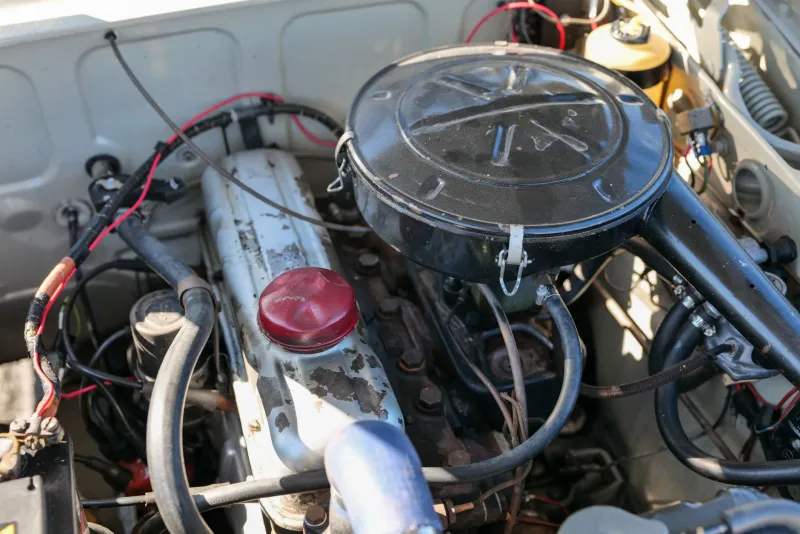
Your engine thermostat is a small, spring-loaded valve that sits between the engine and the radiator. Its entire job is to regulate coolant flow based on temperature. When your engine is cold — say, right after you start it on a winter morning — the thermostat stays closed. This forces coolant to circulate only within the engine itself, allowing it to reach operating temperature faster.
Once the coolant hits a certain temperature threshold (typically somewhere between 180°F and 205°F depending on your vehicle), the thermostat opens and allows coolant to flow through the radiator, where it gets cooled down before returning to the engine.
That's it. It's a temperature-controlled gate. No electronics, no sensors on most older designs — just a wax pellet that expands with heat and pushes the valve open.
The "Running Cold" Confusion
One of the most common reasons people suspect thermostat failure is a temperature gauge that seems lower than expected. Maybe it used to sit at the midpoint and now it's hovering closer to the bottom. Drivers often interpret this as the engine "running cold" and assume the thermostat is stuck open, allowing too much coolant to flow through the radiator.
Sometimes that's true. But here's the thing — a lot of times it isn't.
Temperature gauge behavior can be influenced by a bunch of other factors: a faulty coolant temperature sensor, a corroded sensor connector, or even a gauge cluster issue. These components are far more prone to failure than the thermostat itself, and they're cheaper to diagnose properly before you start swapping parts.
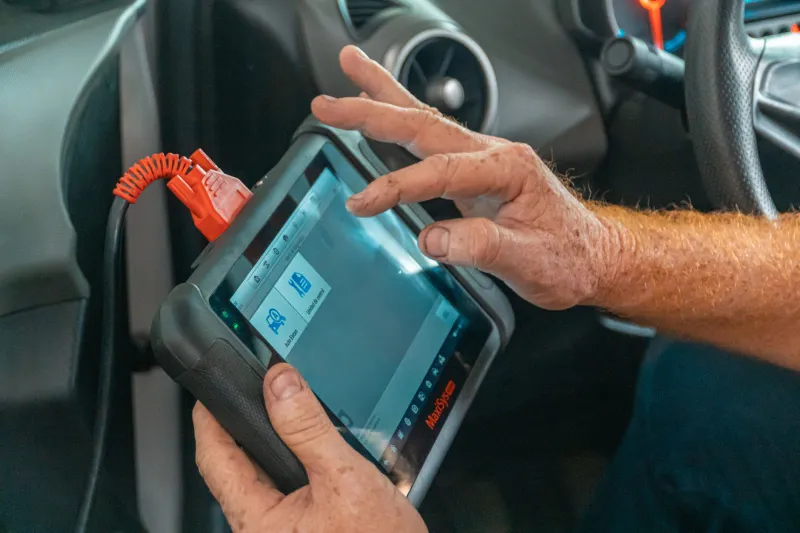
If your gauge reads low but your engine is actually at normal operating temperature (which you can verify with an OBD-II scanner that shows live coolant temp data), your thermostat is almost certainly fine. What you've got is a sensor or gauge problem.
When the Thermostat Really Is the Culprit
That said, thermostats do fail — and when they do, the symptoms are usually pretty clear.
Stuck open: If your thermostat is stuck in the open position, coolant flows through the radiator continuously, even when the engine is cold. The result is an engine that takes forever to warm up and often never reaches proper operating temperature. You'll notice the heater blowing lukewarm air even after driving for 10–15 minutes, and your fuel economy will likely take a hit because engines run richer when they're cold.
Stuck closed: This is the more serious failure. A thermostat stuck shut prevents coolant from reaching the radiator, so the engine overheats quickly. You'll see the temperature gauge climbing into the red, and if you ignore it, you're looking at potential head gasket damage or worse. This one you'll definitely notice — and you won't be wondering if it's the thermostat.
Erratic opening: Less common, but thermostats can also start opening and closing inconsistently, causing the temperature gauge to fluctuate. This usually shows up as a gauge that can't settle at a steady reading while cruising at highway speeds.
The Diagnostic Shortcut That Skips the Real Problem
Here's why thermostats get replaced unnecessarily so often: they're cheap. A replacement thermostat for most vehicles costs between $10 and $30, and installation is usually straightforward. So when a shop sees a cooling system complaint and wants to offer a quick fix, swapping the thermostat is low-hanging fruit. It's not always dishonest — sometimes it's just lazy diagnostics.
A proper cooling system diagnosis should include checking the actual coolant temperature with a scanner, testing the coolant temperature sensor, inspecting the radiator cap (yes, the cap matters — a weak cap changes the system's pressure rating and affects boiling point), and looking at coolant condition and level. Skipping those steps and jumping straight to the thermostat is a shortcut that might temporarily satisfy a customer without actually solving the problem.
How to Check Before You Commit to a Repair
If you've got a basic OBD-II scanner — the kind you can pick up for under $30 or borrow from most auto parts stores — you can pull live coolant temperature data yourself. Start your car cold and watch the temp climb. It should reach somewhere in the 180–210°F range and hold steady once you're driving. If it climbs normally and holds, your thermostat is doing its job.
If the scanner shows normal temps but your gauge looks off, that's your coolant temp sensor or gauge cluster. If the scanner confirms the engine is genuinely running cold, then yes — the thermostat is a reasonable suspect.
You can also do a rough visual check after a cold start by feeling the upper radiator hose. With the engine cold and running, that hose should stay cool for several minutes. Once the thermostat opens, it'll get hot quickly. If it's hot almost immediately after startup, your thermostat might be stuck open.
Bottom Line
The thermostat is one of the simplest parts in your cooling system, and that simplicity means it gets blamed for a lot of problems it didn't cause. Before you approve a replacement, push for a proper diagnosis. A $30 part isn't worth much if the real issue is a $15 sensor that nobody bothered to test.
At Hueco Automotive, we're big on not throwing parts at problems. If your temperature gauge is acting up, bring it in and let's actually figure out what's going on — not just guess our way to a repair order.